Playing casino games should be fun, but it can quickly become stressful when real money is on the line. Many players struggle with anxiety, frustration, and emotional reactions that can harm both their wallet and mental health. The good news is that simple strategies can help anyone stay calm and in control while gaming.
Learning to manage casino stress starts with understanding what triggers it and having practical tools to stay relaxed during play. Small changes in approach can make a big difference. Setting limits, taking breaks, and recognizing emotional patterns are all steps that lead to better gaming experiences.
This guide covers everything from identifying stress triggers to building healthier gambling habits. Readers will discover how to keep emotions in check, set realistic expectations, and know when to seek support. These tips work for both online and in-person casino play.
Understanding Casino Stress
Casino stress stems from multiple sources including money concerns, emotional swings, and the competitive atmosphere of gaming. Players who recognize these triggers and symptoms can take steps to protect their mental state and make better choices at the tables.
Common Causes of Gaming Stress
Financial pressure ranks as the primary source of stress for casino players. When real money is at stake, the fear of losing can create intense anxiety. This becomes worse during losing streaks when players watch their bankroll shrink.
The unpredictable nature of casino games adds another layer of stress. Players cannot control outcomes, which creates frustration and tension. Slot machines, card games, and roulette all involve chance, leaving players feeling helpless when results don’t go their way.
Time pressure also contributes to stress levels. Fast-paced games demand quick decisions, giving players little time to think through their options. The casino environment itself brings stress through constant noise, flashing lights, and crowds of people. These distractions make it harder to focus and stay calm.
Signs and Symptoms of Stress While Gambling
Physical signs of stress appear first for most players. These include:
- Increased heart rate
- Sweaty palms
- Tense muscles
- Headaches
- Upset stomach
Emotional symptoms show up as irritability and mood swings. Stressed players may snap at dealers or other players over minor issues. Some become withdrawn and quiet, while others get loud and aggressive.
Mental symptoms affect how players think and behave. They might chase losses by betting more than planned. Stressed players often make impulsive decisions without considering the consequences. They may also have trouble concentrating on the game or following basic strategy.
The Impact of Stress on Decision Making
Stress clouds judgment and leads to poor betting choices. Players under stress tend to make emotional decisions rather than logical ones. They might increase bet sizes to recover losses quickly, which usually results in bigger losses.
The stressed brain struggles to process information properly. Players miss important details about the game and ignore warning signs that they should stop playing. They forget their predetermined budget limits and betting strategies.
Stress also triggers impulsive behavior. Players might switch games frequently, hoping for better luck elsewhere. They may stay at the casino longer than intended, believing their luck will change. These decisions rarely improve outcomes and often make the situation worse.
Easy Tips for Relaxed Gaming
Managing casino stress comes down to three core practices: controlling your time and money, staying aware of your decisions, and giving yourself regular breaks from play.
Setting Time and Budget Limits
Players should decide how much money they can afford to lose before they start gambling. This amount needs to be money that won’t affect their ability to pay bills or cover daily expenses. Once they set this budget, they must stick to it no matter what happens during their session.
Time limits work the same way as money limits. A player should choose a specific amount of time to spend gambling, like one hour or two hours. When that time runs out, they need to stop playing. Many online casinos offer tools that automatically log players out after a set time period.
Key limits to set:
- Daily loss limit
- Weekly spending cap
- Session time limit
- Single bet maximum
These boundaries help players avoid chasing losses or spending more than planned. Writing down these limits before gambling makes them harder to ignore in the moment.
Practicing Mindful Gambling
Mindful gambling means paying attention to emotions and decisions while playing. Players who notice they feel angry, desperate, or overly excited should pause and check their state of mind. These strong emotions often lead to poor choices and bigger losses.
A mindful approach treats gambling as entertainment, not as a way to make money. Players should ask themselves why they’re gambling and whether they’re still having fun. If the answer is no, it’s time to stop.
Staying mindful also means avoiding alcohol while gambling. Alcohol clouds judgment and makes it easier to ignore limits or make impulsive bets. Players think more clearly and make better decisions when they stay sober.
Taking Regular Breaks
Regular breaks give the brain time to reset and help players avoid fatigue. A good rule is to take a 10-minute break every hour of play. During these breaks, players should step away from the screen or table completely.
Physical movement during breaks helps reduce stress. Players can walk around, stretch, or get fresh air. These activities increase blood flow and clear the mind.
Breaks also provide a chance to check in on limits and evaluate whether to continue playing. A player might realize they’ve been gambling longer than intended or that they’re no longer enjoying themselves. This awareness helps them make better choices about when to stop.
Building Healthy Gambling Habits
Healthy gambling habits start with setting up the right space, using relaxation methods during play, and making sure gaming doesn’t take over other important parts of life. These three elements work together to create a sustainable and enjoyable casino experience.
Creating a Calm Gaming Environment
The physical space where someone gambles affects their stress levels and decision-making. Players should choose a quiet, comfortable area with good lighting and minimal distractions. This means turning off the TV, putting phones on silent, and making sure the room temperature is comfortable.
A well-organized gaming space helps maintain focus. The computer screen should be at eye level to prevent neck strain. The chair needs proper back support for longer sessions.
Players should keep water nearby to stay hydrated. Snacks should be healthy options like nuts or fruit rather than junk food. The space should feel relaxing, not chaotic.
Key environment factors:
- Comfortable seating and proper lighting
- No background noise or interruptions
- Easy access to water and healthy snacks
- Clean, organized surroundings
Incorporating Relaxation Techniques
Breathing exercises help manage stress during gambling sessions. Players can take five deep breaths before making big betting decisions. This simple pause helps clear the mind and reduces impulsive choices.
Quick stress-relief methods work well between games. Stretching the neck and shoulders releases tension. Rolling the wrists and ankles keeps blood flowing during long sessions.
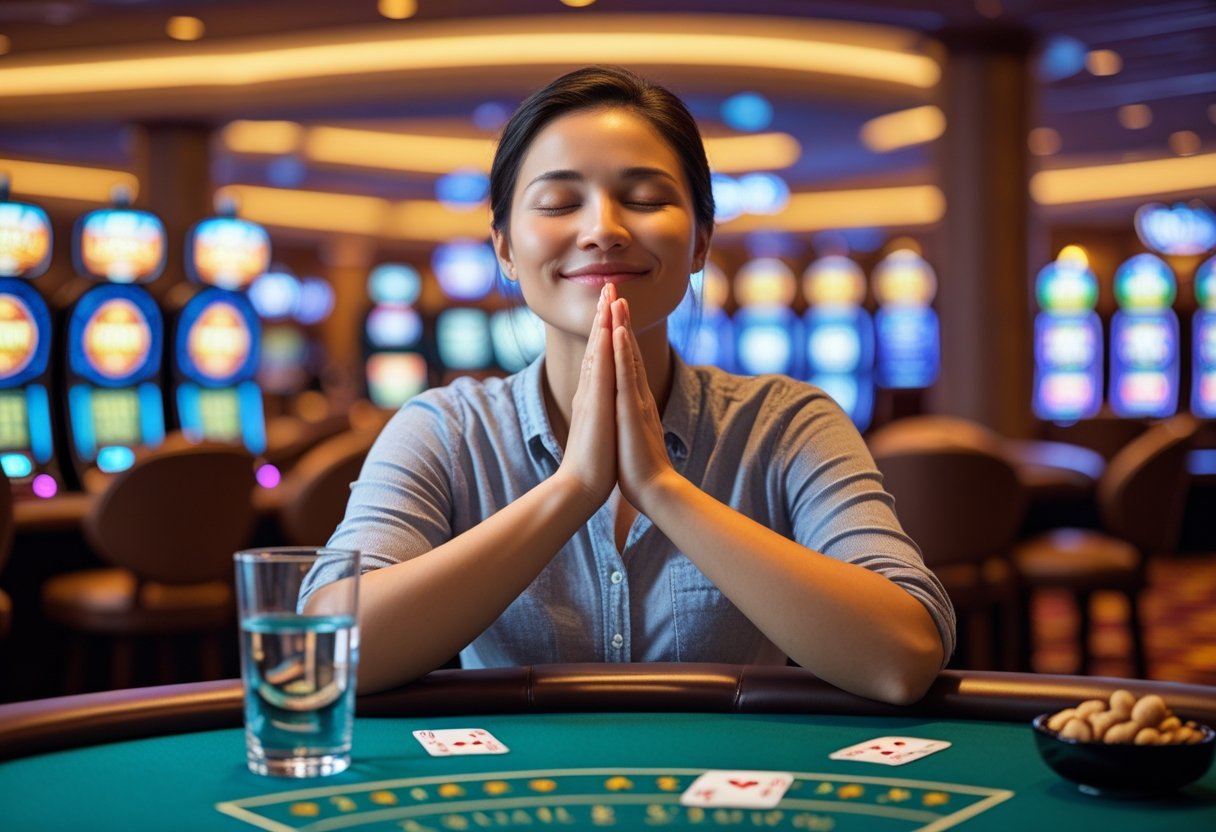
Some players find it helpful to close their eyes for 30 seconds after a loss. This brief break prevents emotional reactions from affecting the next bet. Others prefer to stand up and walk around for a minute or two.
Mindfulness techniques keep players present in the moment. Focusing on physical sensations, like feet touching the floor, brings attention back when stress builds up.
Balancing Gaming With Other Activities
Gambling should fit into a full life, not replace it. Players need to maintain hobbies, exercise routines, and social connections outside of casinos. Setting specific times for gaming prevents it from bleeding into other activities.
Regular physical activity reduces overall stress levels. Even a 20-minute walk each day helps. Exercise also provides a natural break from screens and gambling thoughts.
Morning and evening routines that don’t involve gambling create structure. Reading, cooking, or spending time with family gives the brain different types of stimulation. These activities help prevent gambling from becoming the only source of entertainment.
Players should track how much time they spend gambling compared to other activities each week. If gambling takes up more than 10-15% of free time, it might be crowding out other important parts of life.
Managing Emotions and Expectations
Casino gaming triggers strong emotional responses that can cloud judgment and lead to poor decisions. Players who stay calm during both winning and losing streaks make better choices and enjoy their experience more.
Handling Wins and Losses Calmly
Winning streaks often create false confidence. Players who win several rounds in a row tend to believe they’ve found a system or that luck will continue. This leads to bigger bets and riskier choices.
The truth is that each game outcome is independent. A win doesn’t predict the next result. Players should treat wins as fortunate moments, not proof of skill or lasting luck.
Losses trigger different problems. Many players try to chase losses by betting more money to recover what they’ve lost. This strategy rarely works and usually makes losses worse.
Effective responses to wins and losses:
- Keep bet sizes consistent regardless of recent results
- Take breaks after big wins or losses
- Remember that variance is normal in all casino games
- Stick to predetermined betting limits
- Avoid increasing bets based on emotions
Players should view each session as separate from previous ones. Past results don’t influence future outcomes in games of chance.
Recognizing When to Walk Away
Physical and mental signals tell players when it’s time to stop. Fatigue reduces decision-making ability and increases mistakes. Players who feel tired, frustrated, or overly excited should leave the table.
Clear signs it’s time to stop:
- Spending more than the planned budget
- Feeling angry or upset about losses
- Playing to escape problems or stress
- Difficulty concentrating on the game
- Breaking predetermined rules or limits
Setting time limits before playing helps prevent extended sessions. A player might decide to play for two hours, then leave regardless of results. This approach removes emotion from the decision to stop.
Money limits work the same way. A player sets a loss limit and win goal before starting. When either number is reached, the session ends. This protects winnings and prevents excessive losses.
Seeking Support for Stress Management
Getting help with gambling-related stress involves building connections with others who understand and working with trained professionals who specialize in these challenges. Both approaches provide different benefits that work together to create a complete support system.
Connecting With a Support Network
Support networks offer a safe space where people can share experiences and learn from others facing similar challenges. Groups like Gamblers Anonymous provide regular meetings where members discuss their struggles with gambling stress without judgment. These groups are free and available in most communities.
Friends and family members can also form part of a support network. Talking openly with trusted people about gambling habits and stress levels creates accountability. Many people find that simply expressing their feelings to someone who listens reduces their stress significantly.
Online forums and chat groups connect people who cannot attend in-person meetings. These digital spaces operate 24/7, making support available whenever stress levels rise. Members share coping strategies that have worked for them and offer encouragement during difficult times.
Utilizing Professional Resources
Licensed therapists and counselors trained in gambling addiction provide personalized strategies for managing stress. These professionals use proven methods like cognitive behavioral therapy to help people change their thinking patterns around gambling. Sessions typically occur weekly and focus on identifying stress triggers.
National helplines offer immediate support during crisis moments. The National Problem Gambling Helpline (1-800-522-4700) connects callers with trained counselors at any time. These services are confidential and free.
Financial advisors who specialize in gambling-related debt help create realistic budgets and repayment plans. This support reduces the financial stress that often accompanies problem gambling. Many community health centers also offer mental health services on a sliding fee scale based on income.
Frequently Asked Questions
Managing stress in a casino environment requires understanding practical techniques and recognizing warning signs before they escalate. Players benefit from specific strategies like breathing exercises, time limits, and scheduled breaks to maintain control during gaming sessions.
What are effective relaxation techniques to apply during a casino visit?
Players can use several relaxation methods while at a casino. Deep breathing helps slow the heart rate and clear the mind between games. Taking a short walk around the casino floor allows the body to reset and provides distance from the gaming area.
Progressive muscle relaxation works well in casino settings. This involves tensing and releasing different muscle groups while seated at a slot machine or table. Players can also practice mindfulness by focusing on their immediate surroundings rather than potential wins or losses.
Can you identify common signs of stress while gaming and how to manage them?
Physical signs of stress include sweating, rapid heartbeat, and tense shoulders or jaw. Players may also notice they’re making faster decisions than usual or feeling irritable with dealers or other players. These symptoms indicate it’s time to step away from the game.
Mental signs appear as difficulty concentrating or obsessive thoughts about recovering losses. When these signs emerge, players should take an immediate break. Walking outside for fresh air or getting a meal helps interrupt the stress response.
What strategies can be employed to maintain a calm demeanor in competitive gaming scenarios?
Setting realistic expectations before playing prevents disappointment. Players should view casino games as entertainment rather than income opportunities. This mindset shift reduces pressure during gameplay.
Focusing on the process instead of outcomes helps maintain composure. Players can concentrate on their strategy and decision-making rather than fixating on wins or losses. Keeping conversations light with other players or dealers also creates a more relaxed atmosphere.
Are there breathing exercises that help in reducing tension while involved in casino games?
The 4-7-8 breathing technique works well at gaming tables. Players breathe in through the nose for four counts, hold for seven counts, and exhale through the mouth for eight counts. This exercise can be done discreetly while playing.
Box breathing offers another option. Players inhale for four seconds, hold for four seconds, exhale for four seconds, and hold again for four seconds. Repeating this cycle three to five times lowers stress levels without drawing attention.
How does one set limits to prevent stress associated with gambling?
Players should establish a strict budget before entering a casino. This amount should be money they can afford to lose without affecting bills or savings. Once set, this limit must not be exceeded regardless of wins or losses.
Time limits prove equally important. Players can set alarms on their phones to remind them when their predetermined gaming session should end. These boundaries create structure and prevent impulsive decisions driven by emotion.
What role does regular breaks play in managing anxiety during long gaming sessions?
Breaks interrupt the cycle of continuous play that leads to fatigue and poor judgment. Taking a 10-15 minute break every hour allows the brain to rest and process information. Players return to games with renewed focus and better decision-making abilities.
Regular breaks also provide opportunities to assess emotional state and spending. Stepping away from the gaming floor helps players evaluate whether they’re still enjoying themselves or playing to chase losses. This pause creates space for rational thinking before continuing or ending a session.