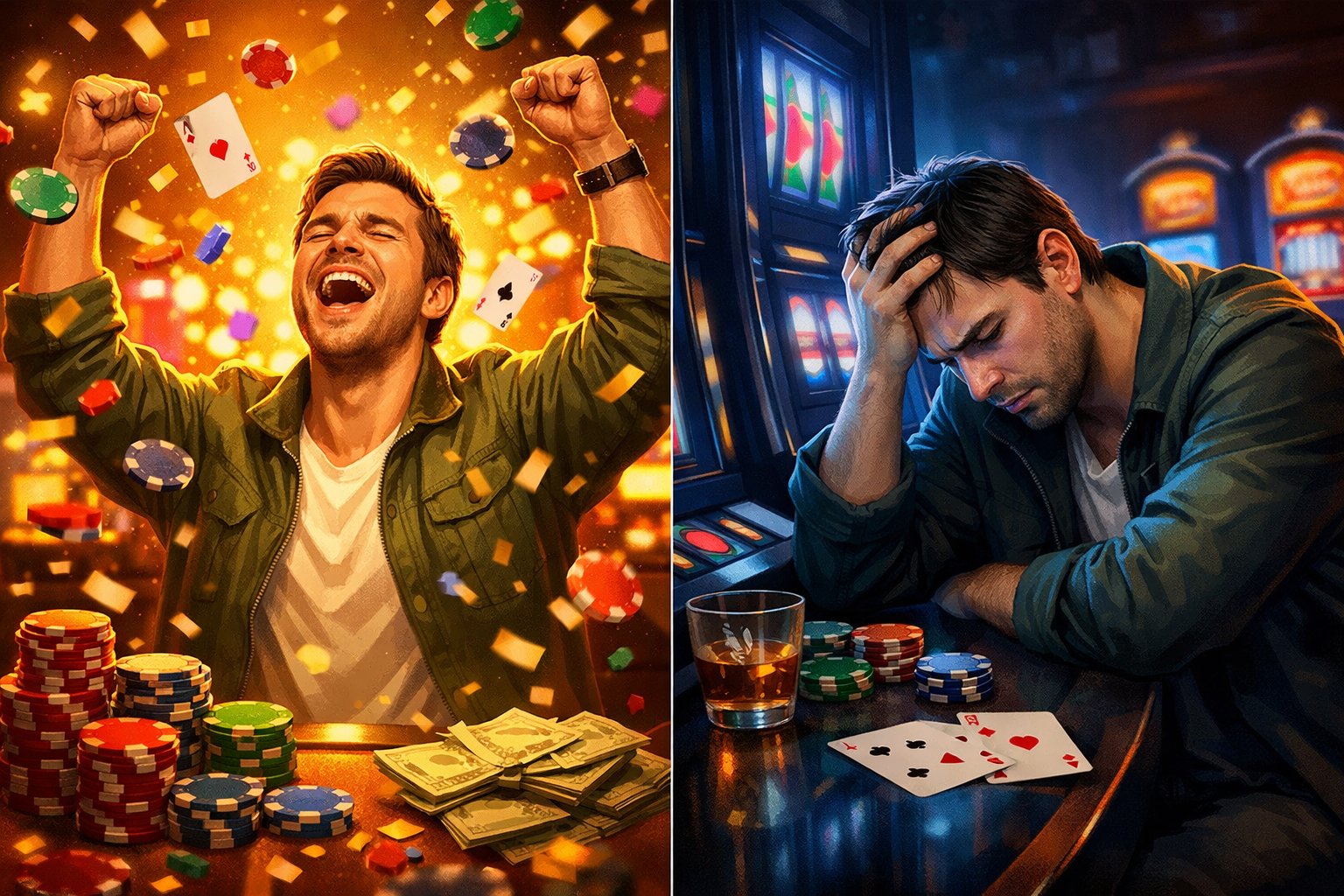
Walking into a casino can feel exciting, but what happens after you win or lose often catches people off guard. The emotional reactions to gambling outcomes are typically much stronger than most people expect. You might feel on top of the world after a win or surprisingly upset after a loss, even if the money involved isn’t that significant.
Your brain responds to casino wins and losses differently than it does to regular financial gains or setbacks because of how reward systems work in your mind. Research shows that losing money actually creates about twice as much emotional pain as winning the same amount creates pleasure. This imbalance explains why a $100 loss can ruin your mood more than a $100 win improves it.
Several factors work together to make casino emotions so intense. Your brain chemistry changes during gambling, the environment around you is designed to heighten feelings, and your own thought patterns can make wins seem more meaningful and losses more frustrating than they really are. Understanding why these emotions hit so hard can help you recognize what’s happening when you gamble.
The Psychology Behind Casino Wins and Losses
Your brain treats casino wins and losses differently than money lost or gained in other situations. The casino environment activates specific emotional responses and chemical reactions that make each outcome feel more intense than the actual dollar amount involved.
Emotional Triggers in Casino Environments
Casinos create environments designed to maximize emotional responses. The sounds, lights, and social atmosphere work together to keep you in a heightened emotional state.
When you win, even a small amount, games play celebratory sounds and display flashing lights. These celebrations trigger excitement regardless of whether you actually made a profit. Some slot machines use “losses disguised as wins” where you win less than you bet, but the game still plays winning animations and sounds.
Near-misses create another powerful emotional trigger. When slot symbols almost line up or you nearly hit a winning hand, your brain responds almost identically to an actual win. This response keeps you motivated to continue playing because it feels like success is just within reach.
The combination of these triggers keeps you emotionally engaged. Each spin or hand becomes an emotional event rather than a simple financial transaction.
Risk and Reward Response in the Brain
Your brain weighs losses more heavily than gains. Research shows that losing $100 creates about twice the emotional impact as winning $100.
This imbalance is called loss aversion. It explains why you might keep playing after losses, trying to “win back” what you lost. The pain of losing drives stronger emotional responses than the pleasure of winning equivalent amounts.
Your brain also struggles with probability in casino settings. You tend to overestimate your chances of winning after a loss or after seeing someone else win. These distorted expectations come from how your brain processes risk and reward in uncertain situations.
The anticipation of potential wins activates the same brain regions involved in actual wins. This means just thinking about winning creates emotional responses before any outcome occurs.
Dopamine and Anticipation
Dopamine releases in your brain during gambling create feelings of pleasure and motivation. This chemical doesn’t just respond to wins—it surges during the anticipation phase before you know the outcome.
The uncertainty of each bet triggers dopamine release. Your brain releases more dopamine when outcomes are unpredictable than when they’re guaranteed. This is why variable reward schedules in casino games are so engaging.
Each time you place a bet, the waiting period before the result activates your reward system. The anticipation itself becomes rewarding, separate from whether you actually win or lose. This response keeps you engaged even during losing streaks because the next outcome always carries possibility.
Cognitive Biases That Amplify Casino Emotions
Your brain uses mental shortcuts that work against you in casinos. These cognitive biases make wins feel bigger and losses feel more personal than they actually are.
The Gambler’s Fallacy
You might think a win is “due” after several losses in a row. This belief that past results affect future outcomes is called the gambler’s fallacy.
Each spin of a slot machine or roll of dice is completely independent. A roulette wheel has the same odds on every spin, regardless of what happened before.
If red has come up five times in a row, black is not more likely on the next spin. The odds remain exactly 50/50 for each color. Your brain looks for patterns even when none exist, which makes you expect certain outcomes that have no basis in reality.
This bias keeps you playing longer because you feel certain your luck must change. You might increase your bets thinking a win is coming, which can lead to bigger losses.
Near-Miss Effect
A near-miss happens when you almost win but fall just short. You see two matching symbols on a slot machine with the third one space away. Your brain treats this as almost winning rather than simply losing.
Near-misses trigger the same reward centers in your brain as actual wins. This response makes you feel like you were close to success and should keep trying.
Casino games are designed to produce frequent near-misses. Slot machines show losing combinations that look like wins, such as two jackpot symbols appearing on the payline. These outcomes are just losses, but they feel different from complete misses.
You experience a surge of excitement from near-misses that motivates continued play. This effect explains why you might feel more emotional after barely missing than after a clear loss.
Loss Aversion
You feel losses roughly twice as strongly as equivalent wins. Losing $50 creates more emotional pain than the pleasure you get from winning $50.
This imbalance drives you to chase your losses. You want to keep playing to recover what you lost and eliminate the negative feeling. The emotional distress from losing becomes a major factor in continuing to gamble.
Loss aversion also affects your decision-making at the table. You might take bigger risks to avoid accepting a loss, even when the rational choice is to stop playing.
Your brain treats money already spent as more valuable than potential future winnings. This makes walking away after losses feel like admitting defeat rather than making a smart choice.
Illusion of Control
You believe your actions influence random outcomes in casino games. This illusion makes you think skill or technique can change results that are purely based on chance.
You might blow on dice, press slot machine buttons in specific patterns, or believe you have a “system” for roulette. These actions have no effect on the outcome, but they make you feel more in control.
Games that involve any player input strengthen this bias. Choosing when to stop a slot machine or which cards to hold in video poker creates a sense of influence. Your decisions feel meaningful even when the results are predetermined by random number generators.
The illusion of control increases your emotional investment in each outcome. When you feel responsible for the results, wins feel more rewarding and losses feel more personal.
How Casino Design Enhances Emotional Reactions
Casinos use specific design choices to amplify your emotional responses during gameplay. Sound, lighting, physical space, and payout structures work together to make wins feel bigger and losses feel like near-victories.
Ambient Sounds and Lighting
Casinos carefully select sounds and lighting to trigger emotional responses in your brain. Slot machines use high-pitched chimes and celebratory music when you win, even on small payouts. These sounds mimic the brain’s natural reward signals.
The lighting in casinos stays bright and colorful around gaming areas. Flashing lights accompany wins to create excitement and draw your attention. Your brain associates these visual cues with positive outcomes.
Background music typically plays at a moderate tempo to keep you alert but relaxed. The volume and pace never remind you of time passing. Casinos avoid using jarring sounds or harsh lighting that might prompt you to leave.
Key audio-visual elements include:
- Celebratory sounds for wins of any size
- Warm, colorful lighting that maintains energy
- Consistent ambient noise that masks outside distractions
- Victory animations with bright flashes and movement
Physical Layout and Accessibility
Casino floors are designed without clear pathways or obvious exits. You navigate through maze-like arrangements of slot machines and gaming tables. This layout keeps you engaged with games as you move through the space.
Gaming machines and tables are positioned for maximum visibility. You constantly see and hear other players winning, which creates the impression that wins happen frequently. The lack of windows and clocks removes your awareness of time passing.
High-traffic games sit near entrances to create immediate excitement. Lower-performing machines often occupy premium floor space to encourage extended play. You encounter multiple gaming options at every turn, reducing the chance you’ll leave without playing.
Reward Systems and Payout Structures
Casinos structure payouts to maximize emotional impact rather than actual value. Small wins occur frequently to maintain your dopamine response. Your brain treats these minor victories as significant achievements, even when you’re losing money overall.
Common reward structures:
- Small frequent payouts that keep you playing
- Near-miss results that appear almost like wins
- Bonus rounds that activate randomly
- Progressive displays showing jackpot amounts
The near-miss effect shows you symbols just above or below the winning line. Your brain processes these near-misses similarly to actual wins. This reaction keeps you motivated to continue playing.
Bonus features and free spins create anticipation through delayed gratification. You experience heightened emotional responses during these special rounds, regardless of the actual payout amount.
Social and Cultural Influences on Gambling Emotions
The people around you and the culture you live in shape how you feel about gambling wins and losses. Social settings can amplify your emotional responses, while cultural beliefs about luck and skill change how you interpret outcomes.
Group Dynamics and Social Proof
Gambling in groups creates stronger emotional reactions than playing alone. When you see others win, your brain treats their success as evidence that winning is possible and likely. This effect, called social proof, makes you feel more excited and optimistic about your own chances.
Casinos and online platforms design spaces to showcase winners. You might hear slot machines ringing or see leaderboards displaying big payouts. These signals trigger your desire to join in and experience the same success.
Group settings also reduce your natural caution. When friends encourage you to keep playing or celebrate wins together, you experience more intense positive emotions. The social bonding that happens during gambling makes losses feel less painful in the moment because the group experience provides emotional comfort.
Your gambling behavior changes based on what others around you are doing. If your friends bet larger amounts, you’re more likely to increase your own bets to match the group standard.
Cultural Perceptions of Luck and Skill
Your cultural background affects how you interpret gambling results. Some cultures view gambling outcomes as pure luck, while others believe skill and strategy play major roles. These beliefs change how responsible you feel for wins and losses.
Cultures that emphasize luck tend to produce gamblers who see losses as temporary bad fortune. This mindset can make losses feel less personal but also encourages continued play while waiting for luck to change. You might think your fortunes will turn around soon.
Cultures that value skill create different emotional patterns. When you believe skill matters, wins feel more satisfying because you earned them. Losses can feel worse because you blame yourself for poor decisions rather than bad luck.
Cultural attitudes about risk and money also matter. Some cultures celebrate risk-taking and view gambling as acceptable entertainment. Others see it as irresponsible or morally wrong, which adds shame or guilt to the emotional experience of losses.
Media and Advertising Effects
Gambling advertisements shape your expectations before you place a bet. Marketing campaigns show excited winners and glamorous casino environments. These images create mental associations between gambling and positive emotions like excitement, luxury, and success.
You rarely see advertisements showing the reality of losses or people struggling with gambling problems. This one-sided view distorts your perception of likely outcomes. Your brain builds expectations based on these repeated positive images.
Movies and television often portray gambling as thrilling and winnable. Characters who gamble frequently experience dramatic wins that resolve their problems. These stories make gambling seem more rewarding than it actually is.
Social media adds another layer of influence. You see friends posting about wins but rarely about losses. This selective sharing creates a false impression that winning is common and losses are rare or unimportant.
Comparing Emotional Impact: Wins vs. Losses
Wins and losses trigger different intensities of feeling in your brain. Research shows that losing money creates roughly twice the emotional pain compared to the pleasure you get from winning the same amount.
Short-Term Euphoria Versus Long-Term Regret
When you win at a casino, your brain releases dopamine. This creates a rush of excitement and confidence. The feeling is intense but fades quickly, often within hours or days.
The emotional pattern of wins:
- Immediate joy and excitement
- Increased confidence in your abilities
- Temporary boost in mood
- Quick return to baseline emotions
Losses work differently in your brain. The pain you feel from losing $100 hits about twice as hard as the joy from winning $100. This concept, called loss aversion, explains why you might feel terrible after a losing session even if you won earlier that day.
The negative emotions from losses last longer too. You might feel regret, frustration, or anger for days or weeks. These feelings can push you to chase your losses, trying to win back what you lost. This urge often leads to more losses and deeper regret.
Memory Bias and Recollection of Outcomes
Your brain remembers wins more clearly than losses. This selective memory makes gambling seem more rewarding than it actually is. You can probably recall specific big wins in detail, but your losses blur together.
This memory bias happens because wins create stronger positive memories. Your brain tags these moments as important and stores them with more detail. Losses get minimized or forgotten over time as a protection mechanism.
When you think back on your gambling history, you naturally focus on the wins. This distorted view makes you believe you’ve done better than you actually have. The pattern keeps you coming back, expecting more wins based on incomplete memories.
Personal Factors That Affect Casino Experiences
Individual differences shape how you respond to gambling wins and losses. Your personality and past experiences create unique emotional patterns that determine whether casino sessions feel thrilling, stressful, or manageable.
Personality Traits and Risk Tolerance
Your natural personality traits directly influence how you handle casino outcomes. If you score high in sensation-seeking behaviors, you tend to chase bigger wins and feel more excitement from risk-taking activities. This can make both wins and losses feel more intense.
Risk tolerance varies widely between people. Some players feel comfortable with uncertainty and view losses as part of the experience. Others experience significant anxiety when money is at stake, making even small losses feel overwhelming.
Key personality factors include:
- Impulsivity – affects how quickly you make betting decisions
- Optimism level – shapes expectations about winning
- Emotional stability – determines how well you manage disappointment
- Competitiveness – drives the desire to beat the house or other players
People with lower self-control tend to chase losses more aggressively. If you struggle with impulse regulation in other life areas, you will likely face similar challenges in casino settings.
Past Experiences and Conditioning
Your brain learns from previous gambling outcomes. A big early win can create powerful memories that drive future behavior. You may unconsciously expect similar results and feel disappointed when normal losses occur.
Near-misses condition your brain almost like actual wins. These close calls trigger similar reward responses and make you want to continue playing. Over time, this pattern trains your brain to associate gambling with excitement regardless of actual results.
Previous financial situations also matter. If you have experienced money problems before, losses may trigger stronger fear responses. Players who grew up with financial security often handle losses differently than those who faced economic hardship.
The Role of Technology in Shaping Casino Emotions
Modern casino technology creates stronger emotional responses through instant feedback systems and constant accessibility. Digital platforms track every spin, bet, and win while delivering immediate results that traditional casinos couldn’t match.
Online Casinos and Digital Feedback
Online casinos use algorithms that respond to your actions in milliseconds. Every click triggers visual effects, sounds, and animations designed to make wins feel bigger and losses less painful.
The screen lights up with colors and celebratory graphics when you win. These digital celebrations happen instantly, creating a stronger emotional impact than collecting chips at a physical table. Your brain registers these visual rewards as achievements.
Key digital feedback elements include:
- Animated win displays that take several seconds to count up your winnings
- Sound effects timed to match reward moments
- Progress bars showing how close you are to bonus features
- Pop-up notifications celebrating small wins as “big wins”
Casino AI systems now focus on your emotional stability rather than just game mechanics. The technology monitors how long you play and adjusts the pace of rewards. Near-miss results appear more frequently because algorithms know these outcomes keep you engaged even though you lost.
Mobile Apps and Instant Gratification
Mobile casino apps put gambling in your pocket with 24/7 access. You can play anywhere, which removes the natural breaks that happened when you had to travel to a physical casino.
Push notifications remind you about bonuses and free spins. These alerts trigger anticipation before you even open the app. The constant availability means your emotional responses don’t have time to settle between sessions.
Mobile features that intensify emotions:
- One-tap betting that removes decision-making pauses
- Auto-play functions that speed up game rounds
- Saved payment methods that eliminate friction
- Personalized game suggestions based on your history
Apps remember your preferences and betting patterns. This personalization makes each session feel tailored to you, which increases emotional investment. The convenience of mobile gambling means you’re more likely to play during emotional moments when you normally wouldn’t visit a casino.